In a preschool classroom, writing does not begin with perfect letter formation.
It begins with scribbles.
With stories told in pictures.
With tiny hands gripping crayons like treasure.
Strong preschool writing centers give children a place to experiment with ideas, language, drawing, and early print in a way that feels playful and safe. And when structured intentionally, writing centers become one of the most powerful literacy builders in your Pre-K classroom.
If you’re looking to refresh your writing area or add meaningful journal routines, here’s how to build a preschool writing center that supports emergent writers — plus a free resource to get you started.
Why Preschool Writing Centers Matter
A well-designed preschool writing center supports:
- Oral language development
- Fine motor strength
- Print awareness
- Story sequencing
- Social-emotional expression
- Early phonemic awareness
- Confidence as a “real writer”
In Pre-K, writing is not just handwriting practice. It’s communication.
When children draw a picture and tell you, “This is my dog at the park,” they are organizing ideas, building vocabulary, and learning that marks on paper have meaning.
That is literacy in action.
Start Here: Free Humpty Dumpty Journal Prompts
One of the easiest ways to introduce structured writing time is with a familiar theme.
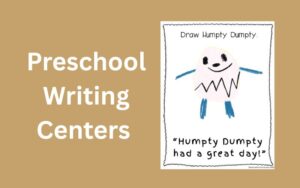
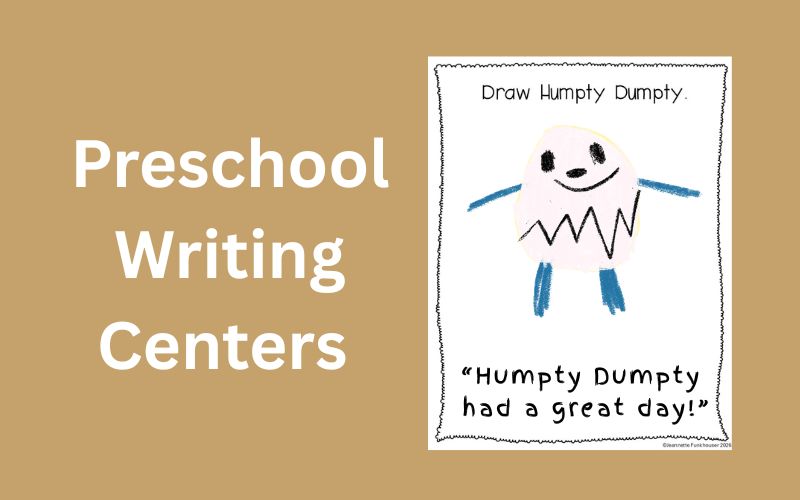
Featured Freebie: Humpty Dumpty Journal Prompts (Free)
This free preschool writing activity is designed for emergent writers. It includes simple, open-ended prompts that allow children to:
- Draw first
- Dictate their ideas
- Label pictures
- Attempt inventive spelling
- Practice early sentence structure
Because it is nursery rhyme-based, students already have background knowledge. That familiarity lowers anxiety and increases participation, especially for children who are hesitant writers.
This free resource works beautifully for:
- Writing centers
- Morning work
- Small groups
- Literacy rotations
- Sub plans
- IEP writing goals
If you’re building preschool writing centers from scratch, this is the perfect starting point.
Building Strong Preschool Writing Centers
Here’s what makes writing centers truly effective in Pre-K classrooms.
1. Predictable Structure
Children thrive when writing time follows a routine:
- Look at the prompt
- Draw your picture
- Tell your story
- Add labels or words
- Share with a friend or teacher
Predictability reduces overwhelm and increases independence.
2. Themed Journal Prompts
Rotating themed preschool journal prompts keeps writing fresh and exciting.
In my Pre-K Journal Writing Prompts with Data Tracking & Family Letter, teachers get:
- Consistent writing pages
- Built-in progress monitoring tools
- Parent communication letters
- Fine motor + literacy alignment
This is especially helpful for:
- IEP documentation
- Teaching Strategies GOLD checkpoints
- Conference portfolios
- RTI documentation
Your writing center can serve both instruction and data collection without feeling clinical.
3. Seasonal & Outdoor Writing Connections
Writing doesn’t have to stay inside.
My Spring Outdoor Journal Prompts allow students to:
- Observe nature
- Draw real-world experiences
- Label objects
- Describe what they see
Outdoor learning strengthens vocabulary, descriptive language, and sensory awareness — all essential for emergent writing.
When children write about something they just experienced, engagement skyrockets.
4. Blending Writing + SEL
Preschool writing centers can also support social-emotional development.
Resources that combine drawing, fine motor, and feelings help children:
- Express emotions safely
- Practice reflection
- Build self-awareness
- Develop narrative skills
When children can draw and write about their day, their friendships, or how they solved a problem, writing becomes meaningful instead of mechanical.
How to Differentiate Writing Centers for Special Education
Because many of us serve diverse learners, preschool writing centers must be adaptable.
Here are simple differentiation strategies:
- Provide visual supports
- Offer sentence starters
- Allow dictation
- Use picture word banks
- Accept scribble writing as valid
- Model shared writing
- Use adaptive grips or markers
Writing development is not linear. It is layered.
Your writing center should meet children where they are — whether they are drawing circles or writing phonetic sentences.
What a Week of Writing Centers Can Look Like
Here’s a simple rotation structure for preschool writing centers:
Monday: Nursery rhyme prompt (Humpty Dumpty)
Tuesday: Personal experience journal
Wednesday: Seasonal or science-based prompt
Thursday: Social-emotional reflection
Friday: Free choice writing
This structure builds consistency while maintaining variety.
Supporting Early Literacy Through Writing
Preschool writing centers naturally reinforce:
- Beginning sounds
- Rhyming awareness
- Story structure
- Vocabulary development
- Print directionality
- Sentence awareness
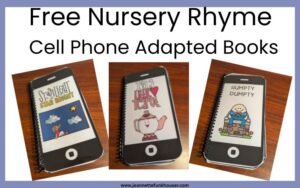
When paired with nursery rhymes, adapted books, and movement activities, writing becomes part of a larger literacy ecosystem in your classroom.
And that’s where the magic happens.
Ready to Strengthen Your Preschool Writing Centers?
If you want to:
- Increase student independence
- Support emergent writers
- Build fine motor + literacy together
- Simplify progress monitoring
- Strengthen home-school connections
Start with the Free Humpty Dumpty Journal Prompts, then explore the full collection of preschool writing centers inside my Teachers Pay Teachers store.
Small routines. Big growth.
Scribbles today. Sentences tomorrow.
And every page tells a story worth celebrating.
Illinois Early Learning & Development Standards (IELDS) Alignment
Strong preschool writing centers are not just engaging — they are standards-aligned and intentional.
Here’s how these Pre-K writing activities align to the Illinois Early Learning & Development Standards (IELDS):
Language Arts
Goal 3: Language Arts
- 3.A.ECa – Use writing and drawing to represent ideas and stories.
- 3.B.ECa – With teacher assistance, write to convey meaning.
- 3.B.ECb – Use a combination of drawing, dictating, and writing to communicate.
When children draw first and add labels or attempt phonetic spelling, they are meeting foundational writing standards in developmentally appropriate ways.
Language Development
Goal 1: Language Development
- 1.B.ECa – Use language for a variety of purposes, including describing and storytelling.
- 1.C.ECa – Participate in collaborative conversations.
Writing centers that include dictation and sharing time directly support expressive language and conversation skills.
Fine Motor & Physical Development
Goal 19: Physical Development & Health
- 19.A.ECa – Use fine motor skills to complete tasks.
Crayon control, pencil grip, tracing, and labeling strengthen hand muscles needed for future handwriting success.
Social Emotional Development
Goal 31: Social Emotional Development
- 31.A.ECa – Express emotions and ideas appropriately.
- 31.B.ECa – Develop relationships with peers and adults.
Journal prompts that include feelings, experiences, and storytelling help children process and communicate emotions safely.