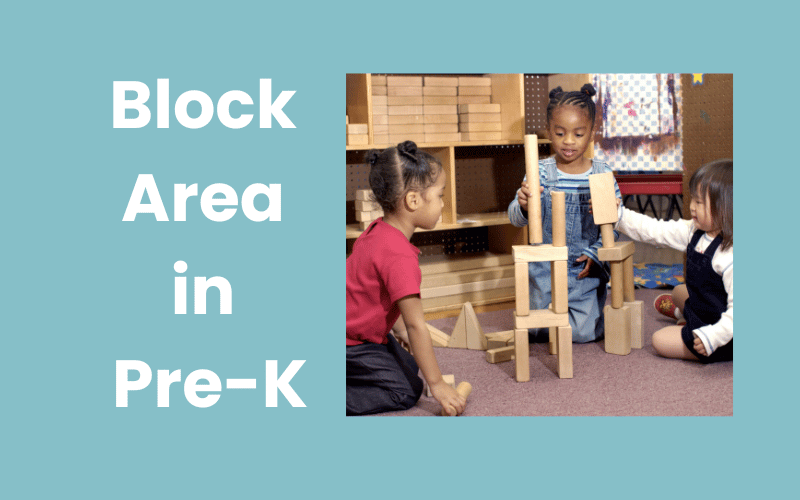
The Block Area in Pre-K: Clear Expectations That Support Big Thinking
The block area is often the loudest corner of a Pre-K classroom, not because it’s chaotic, but because it’s alive with ideas. Towers rise, roads connect, animals move in, and stories unfold. Yet for many teachers, the block area also brings uncertainty: What stays up? What has to be cleaned? How tall is too tall? When is it play and when is it unsafe?
Clear, consistent expectations transform the block area from a source of stress into one of the richest learning spaces in the room. With a few intentional guidelines, children can build freely while adults feel confident about safety, organization, and learning outcomes.
Why the Block Area Matters
Block play supports far more than fine motor skills. In a high-quality Pre-K block area, children are developing:
- Spatial awareness and early geometry
- Problem-solving and planning skills
- Language through describing, negotiating, and storytelling
- Social skills like turn-taking, compromise, and collaboration
- Persistence and flexibility when structures fall and are rebuilt
When expectations are clear, children spend less time seeking adult approval and more time engaged in meaningful play.
“What They Build Is Not a Mess”
One of the most important mindset shifts for adults is recognizing that a block structure, even one that looks scattered or unfinished, represents thinking in progress.
A structure does not need to look symmetrical or “neat” to be meaningful. If a child can describe what they built, name its purpose, or explain who uses it, it counts as a structure.
Language to model:
- “Tell me about what you’re building.”
- “What is this part used for?”
- “Who lives here or uses this?”
This validates the child’s thinking and reinforces that the block area is a place for ideas, not perfection.
Structures Can Stay (With Clear Criteria)
A simple rule helps everyone feel confident:
If it is a structure and the child can describe it, it may stay up.
This encourages intentional building rather than random dumping, while still honoring creativity. Structures can remain for continued play, peer collaboration, or revisiting ideas the next day.
You may choose to:
- Take a quick photo for documentation
- Add a name card or sticky note
- Invite the child to share their structure during group time
Safety Without Shutting Down Play
Block play involves movement, lifting, and sometimes climbing. Clear boundaries keep children safe without eliminating risk-taking entirely.
Build No Taller Than You
This rule is simple, visual, and easy for young children to understand. It supports safety while still allowing ambitious designs.
Blocks You Can Stand On
Sometimes children build stages, ramps, or platforms. Instead of immediately redirecting, pause and ask:
- “What are you building?”
- “How will people use this?”
Observe stability and intent. If it’s unsafe, guide children to problem-solve rather than shut the play down.
Loose Parts and Safety
Loose parts add richness to block play, but they also require clear expectations.
Loose parts must be cleaned up when play is finished.
This keeps walkways safe and teaches children to manage materials responsibly. It also helps children distinguish between permanent structures and temporary accessories.
Clean-Up That Actually Works
“Clean up!” is often too vague for young children.
Instead, be specific:
- “Please put the long blocks back in the blue basket.”
- “The animals go on this shelf.”
- “Let’s match the blocks to the pictures.”
Using picture labels supports independence, language development, and inclusion for all learners.
Looking for a ready-to-use poster and parent handout for your block area?
Grab the free Block Area resource set plus access to my Snicker-Doodles Pre-K Resource Hub.
Baskets Stay on the Shelf
Teach children to take what they need, return it, and go back for more. This reduces dumping, clutter, and overwhelm while building self-regulation skills.
Teaching Expectations Explicitly
Block area rules should be taught just like any other routine.
Ways to introduce expectations:
- Model building and clean-up during small group
- Role-play what to do and what not to do
- Use photos or drawings (not classroom images if privacy is a concern)
- Refer to the block area poster consistently
Revisit expectations often, especially after breaks or classroom transitions.
The Block Area as a Window Into Learning
When expectations are clear, teachers are free to observe rather than manage. The block area becomes a natural assessment tool where you can see:
- Language development
- Social problem-solving
- Early math and science concepts
- Creativity and persistence
Instead of asking children to clean up prematurely, you’re able to ask better questions and extend learning.
The block area does not need more rules. It needs clear, thoughtful expectations that honor play, support safety, and respect children as capable learners.
When children know what’s expected, they rise to the occasion. And when adults trust the process, the block area becomes exactly what it’s meant to be: a place where big thinking happens, one block at a time 🧱
Want These Block Area Tools Ready to Use?
If you’d like to use these block area expectations in your own classroom, I’ve created a free set of companion resources to support you:
✔ A printable Block Area Teacher Poster
✔ A Parent Handout explaining the learning behind block play
✔ Illinois Early Learning Standards connections for block play
✔ Access to my Snicker-Doodles Pre-K Resource Hub, filled with play-based classroom tools
👉 Get the Free Block Area Resources