There’s something magical about watching young children explore the outdoors. Whether tiptoeing through tall grass on a Bear Hunt or digging for worms, the benefits of outdoor learning in early childhood are undeniable. From building motor skills to supporting emotional development, nature-based learning helps children grow in ways that indoor lessons often can’t.
In this post, we’ll dive into the benefits of outdoor learning in early childhood, how it supports sensory development, gross motor skills, and social-emotional growth, and why activities like our annual Bear Hunt are more than just fun—they’re foundational.
🌿 What Is Outdoor Learning?
Nature as a Hands-On Classroom
Outdoor learning is more than just taking a worksheet outside. It’s about using the natural environment as a hands-on classroom—one filled with textures, sounds, movement, and endless curiosity. This type of learning fosters creativity, problem-solving, resilience, and connection with the natural world.
Outdoor learning can include:
- Nature walks and scavenger hunts
- Sensory exploration (mud, leaves, water)
- Gross motor activities (climbing, running, balancing)
- Pretend play in outdoor spaces
- Gardening and environmental education
🐻 Our Annual Bear Hunt: Outdoor Learning in Action
One of our most cherished traditions is the Bear Hunt—a playful, pretend journey inspired by the classic book We’re Going on a Bear Hunt by Michael Rosen and Helen Oxenbury. Each spring, we gather at a local campground where students embark on a guided “hunt” through tall grass, muddy paths, and a pretend cave in search of an imaginary bear.
But make no mistake—this isn’t just play. It’s experiential learning at its best.
Children are navigating uneven terrain and building balance and coordination.
They’re working together, following directions, and building language skills. They’re immersed in sensory-rich environments that challenge their bodies and minds.
The Bear Hunt is an annual reminder that learning doesn’t need four walls to be meaningful.
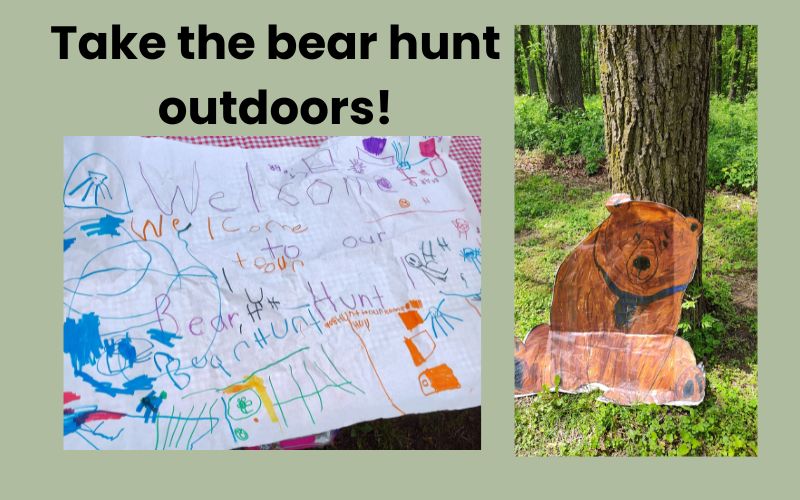
🎒 Ready to go on your own Bear Hunt?
Download our free Bear Hunt Outdoor Adventure Pack filled with scavenger hunts, movement cards, story maps, and more!
💪Gross Motor Activities for Preschool
Outdoor environments naturally encourage large body movements that support gross motor development. Activities like running, climbing over logs, balancing on uneven ground, or hopping over “rivers” help strengthen muscles and improve coordination.
Research shows that regular outdoor play helps young children:
- Build core strength and stability
- Develop better posture and balance
- Improve spatial awareness
- Increase overall physical endurance
And because outdoor play doesn’t feel like “work,” kids are more motivated to keep moving!
👃 Engaging the Senses in Nature
Unlike a typical classroom, the outdoors is bursting with natural sensory input—the smell of damp earth, the sound of crunching leaves, the feel of wind on the skin. These rich experiences help children develop body awareness, regulate emotions, and process the world around them.
Some benefits of outdoor sensory play include:
- Calming overstimulated children through deep pressure (e.g., crawling through tunnels or over logs)
- Encouraging tactile exploration with natural materials (mud, sand, leaves)
- Enhancing auditory discrimination with nature sounds
- Promoting mindfulness and focus by slowing down and noticing the world
When children engage their senses in nature, they become more grounded and attentive learners.
🧠 Outdoor Learning for Preschoolers
Being outside also supports cognitive development in powerful ways. When children encounter new environments, they must think critically, make predictions, and solve problems. Whether deciding which path to take on a trail or figuring out how to cross a “river” during our Bear Hunt, outdoor learning strengthens executive functioning.
Nature-based play also improves:
- Language development through narration, questioning, and storytelling
- Math skills by counting natural objects, sorting leaves, or measuring puddles
- Science understanding through direct observation of life cycles, weather, and seasons
These real-world learning experiences provide context and meaning that make academic skills stick.
🤝 Social-Emotional Benefits of Outdoor Learning
Outdoor learning also encourages cooperation, communication, and emotional resilience. In open-ended, unstructured outdoor play, children must negotiate roles, take turns, and express their needs.
Plus, nature itself is a powerful co-regulator. Studies show that spending time outdoors reduces stress and anxiety in children, boosts mood, and even improves sleep. In other words, nature heals.
Our Bear Hunt, for example, creates a shared memory that builds classroom community and connection. It also provides an outlet for big emotions, movement, and confidence-building—all while having fun.
🌦 Simple Ways to Add Outdoor Learning to Your Routine
Here are a few easy ways to add outdoor learning to your weekly classroom or home schedule:
- Start with a Nature Walk: Go slow and encourage kids to notice smells, colors, shapes, and sounds.
- Create a Sensory Scavenger Hunt: Challenge children to find something rough, smooth, smelly, noisy, or squishy.
- Set Up Outdoor Centers: Bring books, magnifying glasses, or art supplies outside and let kids explore with a purpose.
- Use Outdoor Story Extensions: Act out books like The Bear Hunt using natural props and movement.
Encourage Free Exploration: Leave time for unstructured outdoor play—some of the best learning happens when we step back and let kids lead.
🌱Benefits of Outdoor Learning in Early Childhood
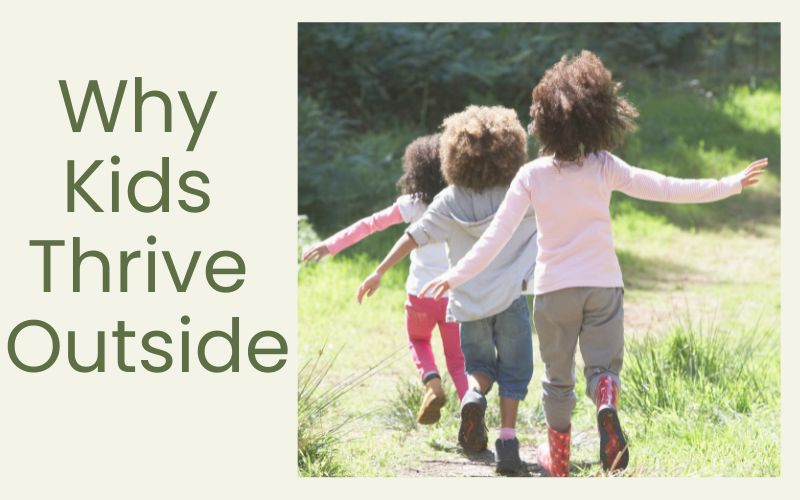
When we step outside with children, we’re not just taking a break—we’re expanding their world. Outdoor learning helps children grow in ways that are hard to replicate indoors. From strengthening their bodies to calming their minds and sparking curiosity, kids truly thrive outside.
So the next time you plan a lesson, consider swapping your carpet square for a grassy patch, your worksheet for a tree stump, and your classroom walls for the wide-open sky. You might be surprised at how much your students grow when they’re given space to move, explore, and just be kids.
💡 Want an easy way to bring today’s ideas to life?
Get our FREE Bear Hunt Outdoor Adventure Pack—perfect for classrooms or backyard fun.